
The Maison
Artisan production
Two identical garments are never the same.
For twenty years this house has made garments for important names in luxury and for national and international labels. Those same hands, in those same workshops, make the garments on this site: the label changes, the workbench does not.
The technique
What cut-and-sewn knitwear is
A sweater is made as pieces already shaped, which are then joined. Not here: the knit is made by the length, like a cloth, and the garment is cut from it on a paper pattern. It is the method of tailoring applied to a material that moves.
Why it costs more effort
Cutting means throwing away: shaped pieces leave nothing over, a length of knit does. In exchange you get shoulders, necklines and armholes that fully fashioned knitting cannot make — and a jacket that falls like a jacket instead of hanging.
Linen is cut by hand
For long runs there is the automatic cutting room; linen does not go there. It is a fibre that shifts and pulls under the blade, and a piece cut out of true only shows at the end, on somebody. So it is cut by hand, piece by piece.
Two gauges in one garment
Collars, plackets, cuffs and hems are knitted firmer than the body. That is why the mock neck's collar stands up on its own and the jacket's ribbing gathers the waist: there is no hidden reinforcement underneath, there is a different knit.
The mark
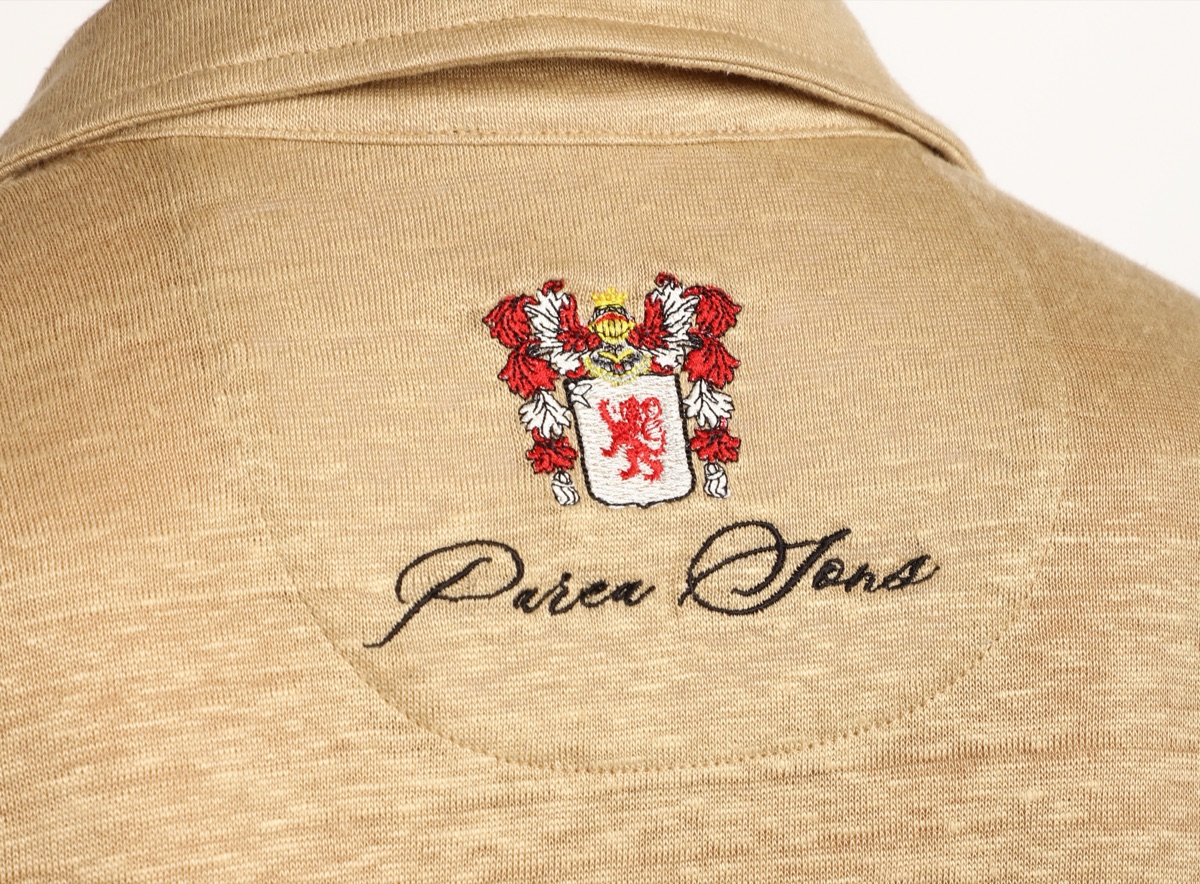
The crest, stitched
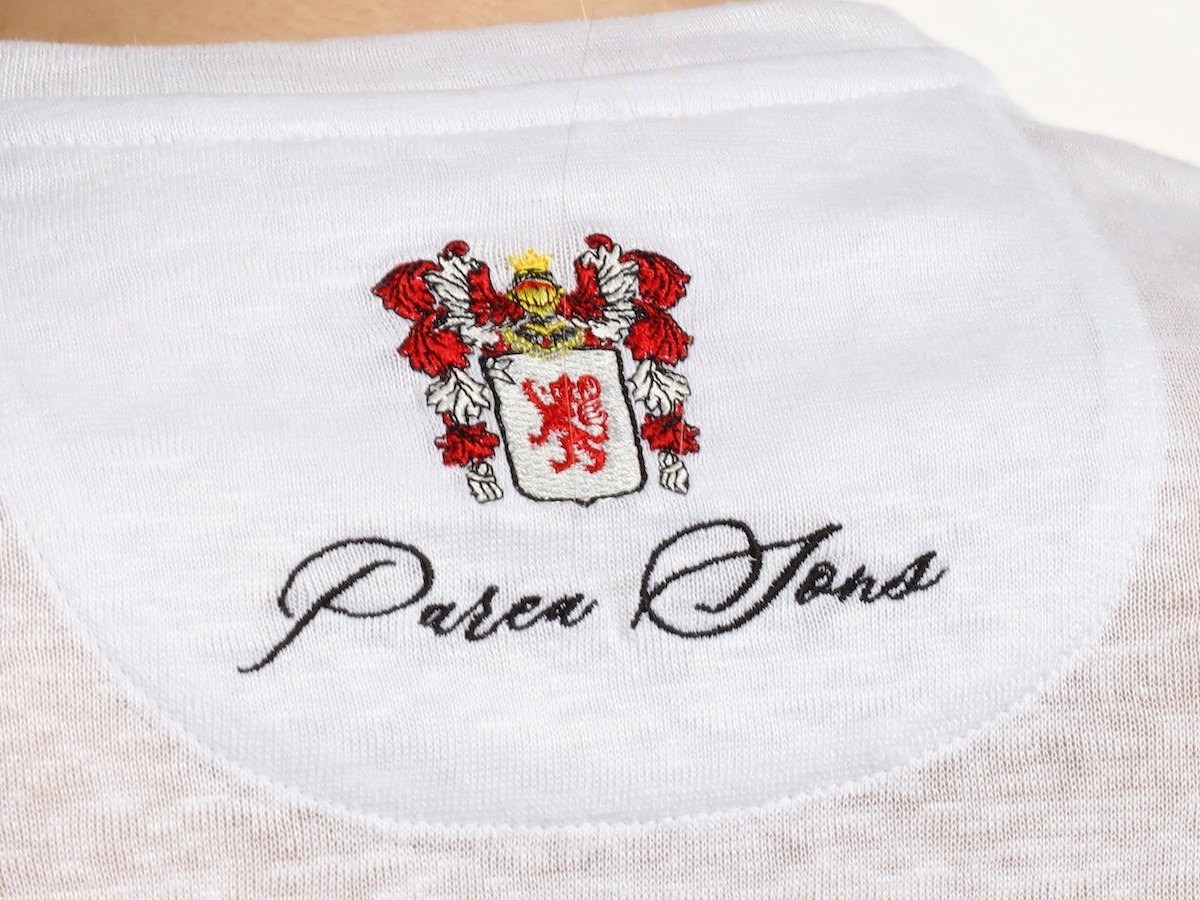
On the garment the mark appears once, embroidered thread on thread. It is not printed and it is not applied: it is stitched into the knit, and it takes as many washes as the garment carrying it.
On a material that gives
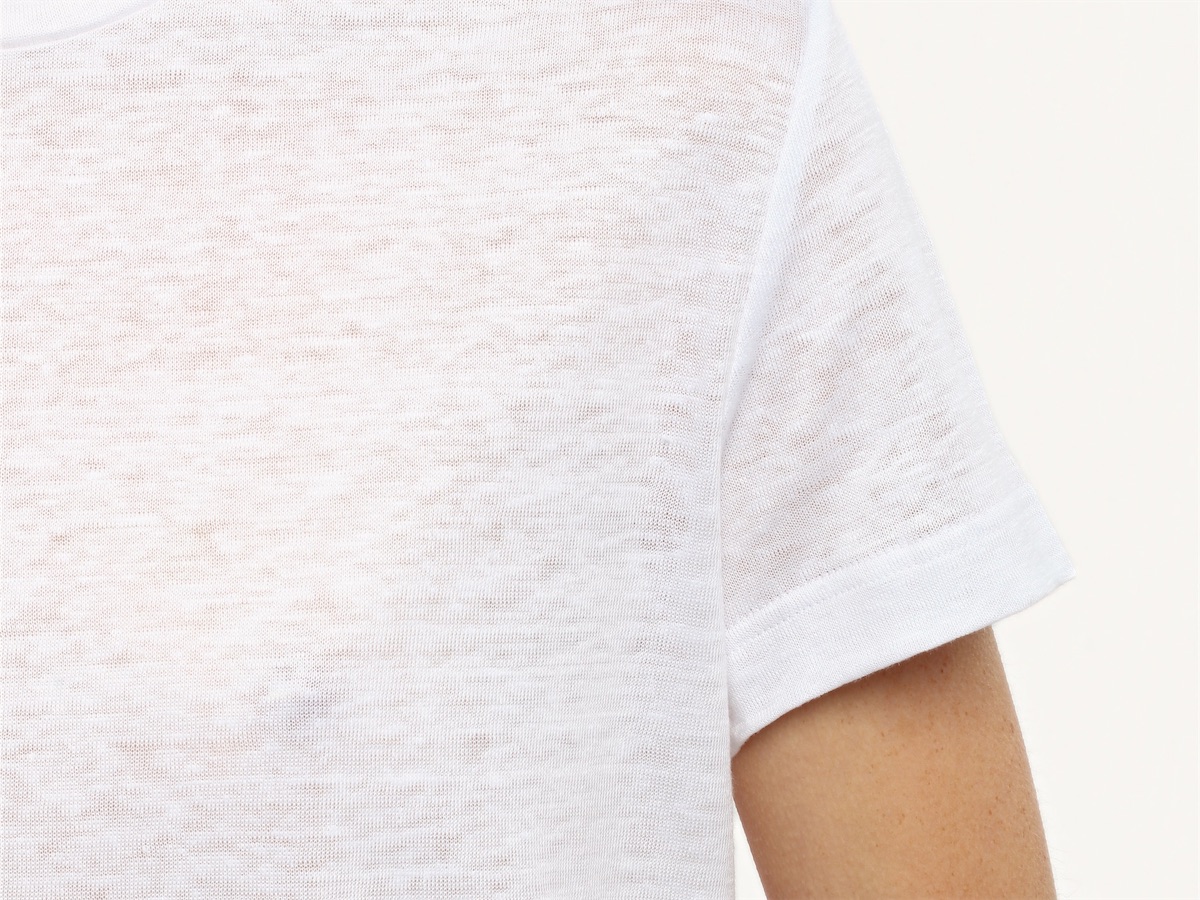
Embroidering on a knit is harder than on a woven cloth: under the needle the ground moves, and embroidery pulled too tight puckers the garment around it. The work is to keep the crest still and the knit free.
The visible seams, by hand
The ones you can see are done by hand, stitch by stitch, in the company and in workshops nearby — the same ones for years. That is why two identical garments are never the same.
Buttons and zips
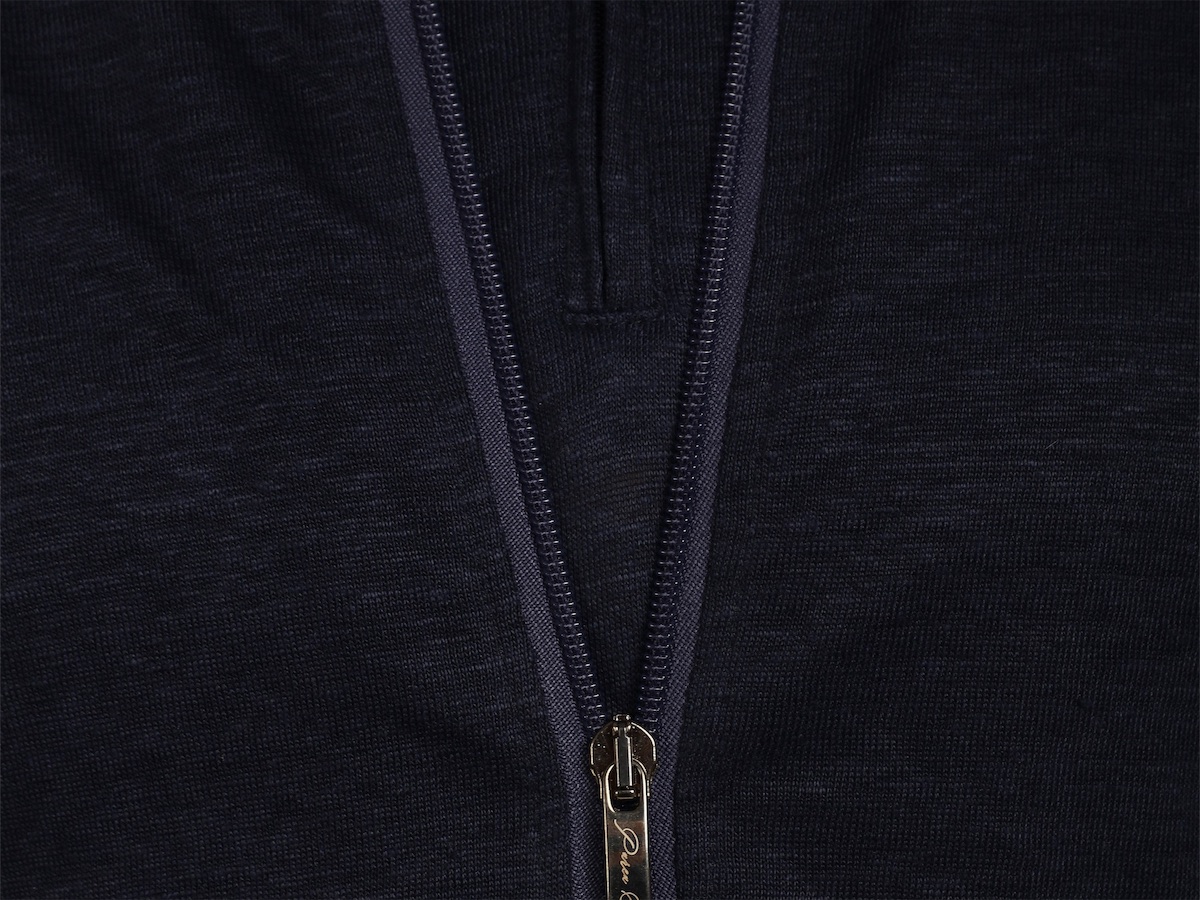
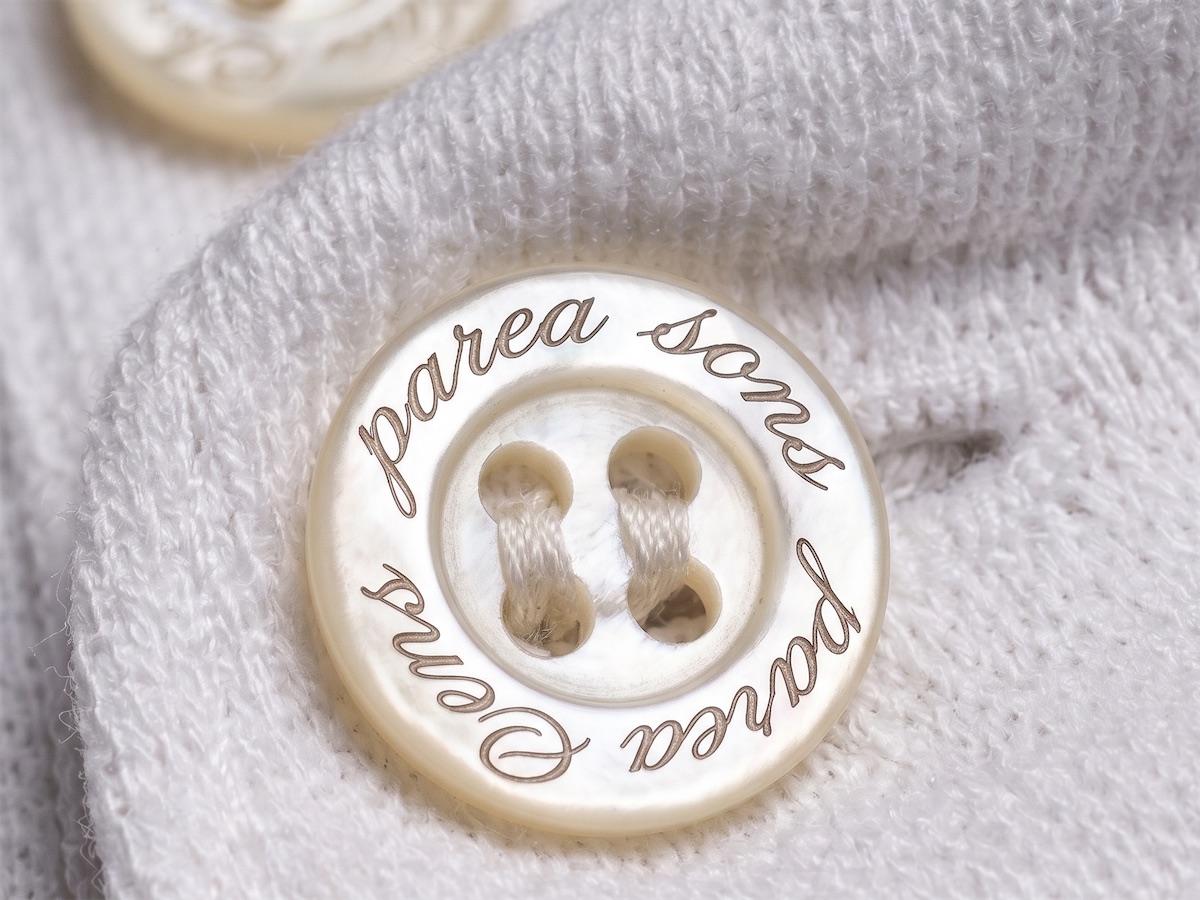
Pale buttons on the polos, a short zip on the mock necks, a full-length zip on the jackets. They are the few parts that are not linen, and for that reason they are chosen not to weigh on the garment or pull it.
One by one, before they leave
Every single garment is checked. A flaw found here costs a garment; found on the person who bought it, it costs the customer.
The button image is generated with artificial intelligence tools. The other three are real photographs of the garments.
Parea Sons Luxury Garments
The workbench is the same.
The five stages of the cycle, from pattern-making to inspection, can be seen together on the maison page.
The complete cycle The linen we work
Back to the maison